Which bottles fit
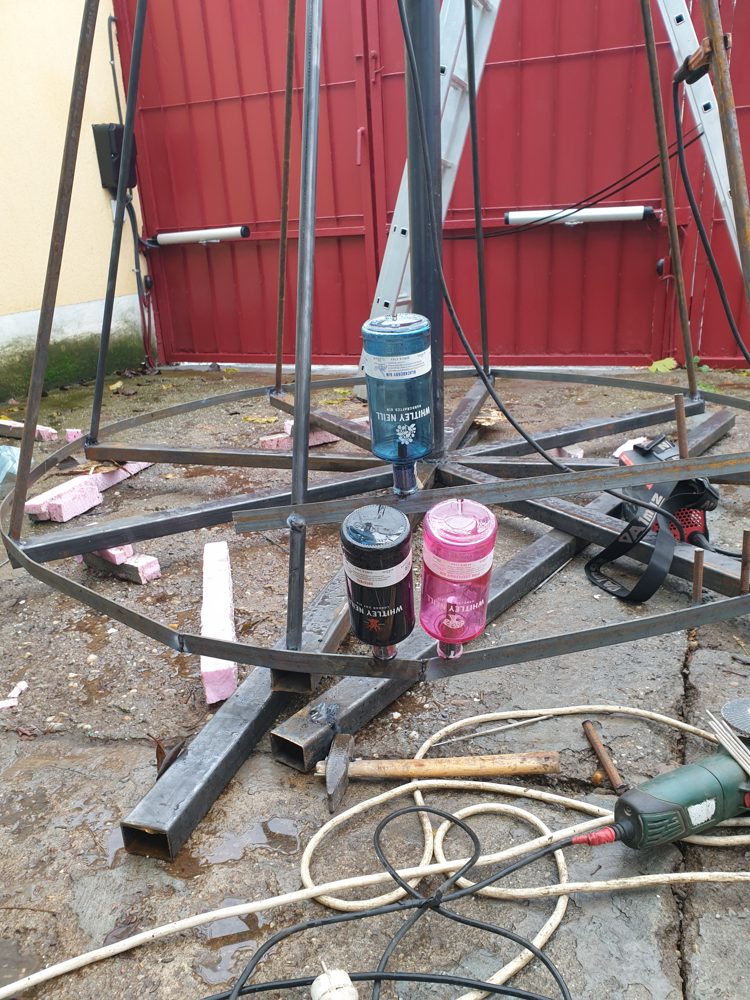
Almost any bottle with a standard neck will sit on a bottle tree spike. The bottles hang neck-down: the spike goes up inside the neck, and the bottle rests on its shoulder.
- Wine bottles (750 ml) are the classic. The necks are a consistent size, the glass is thick, and they come in the best colours.
- Beer and soda bottles work on smaller spikes. They are lighter and cheaper to collect, but the walls are thinner.
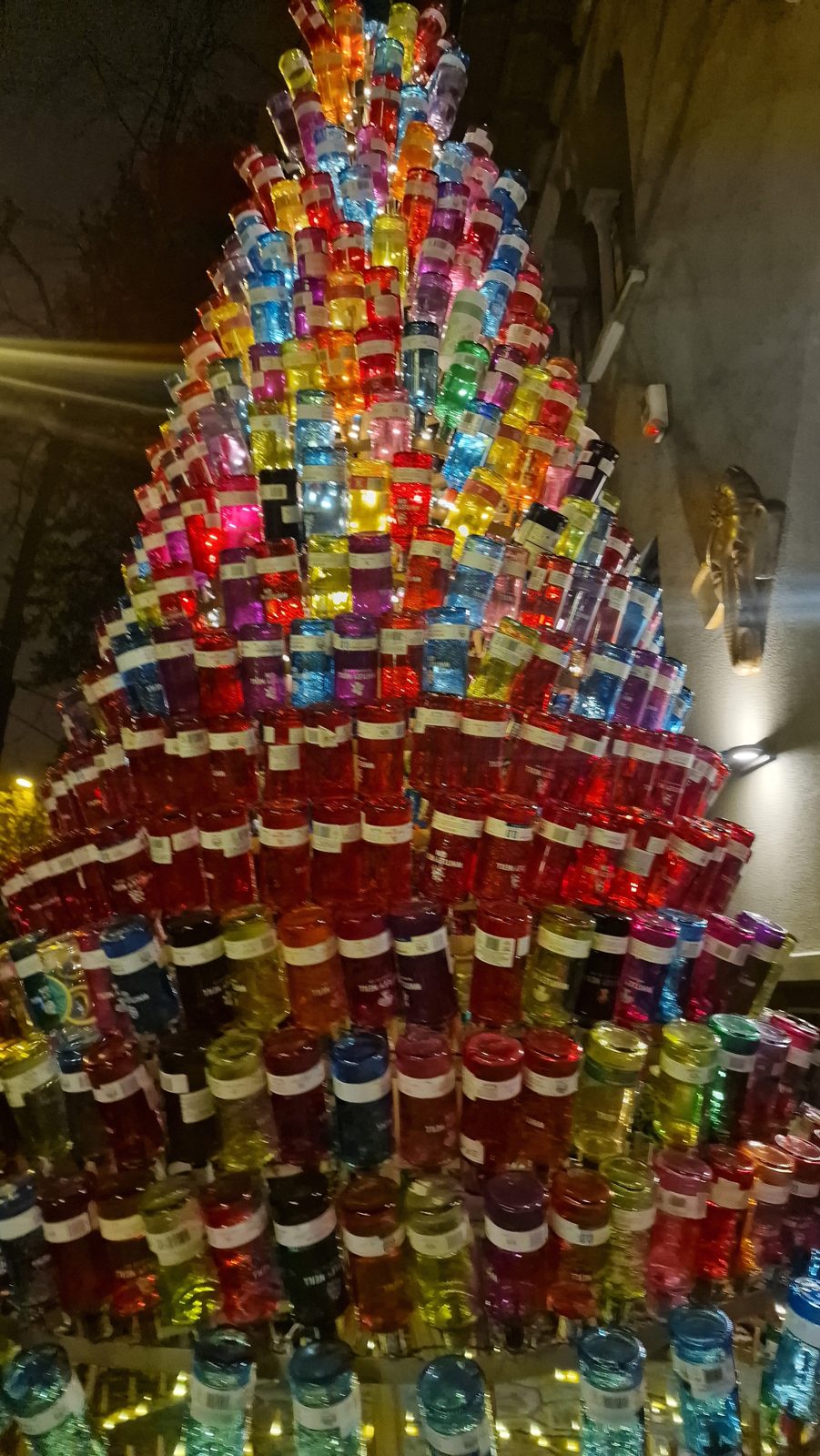
- Spirits bottles are often the most striking, with heavy glass and unusual shapes, but check the neck: some are wider or narrower than a wine bottle.
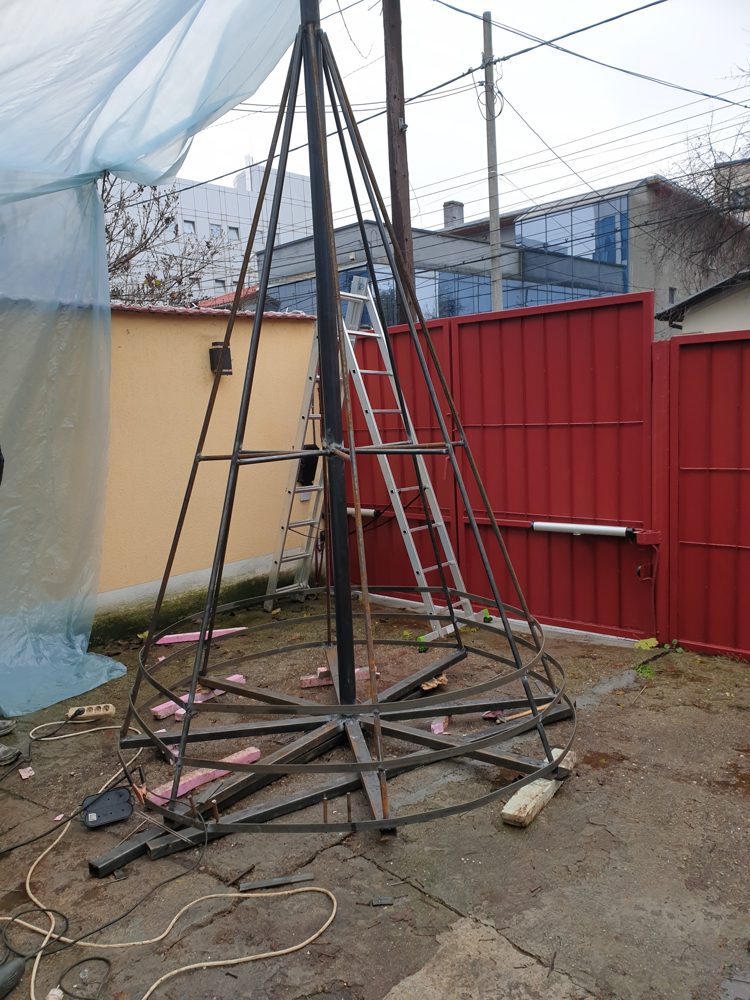
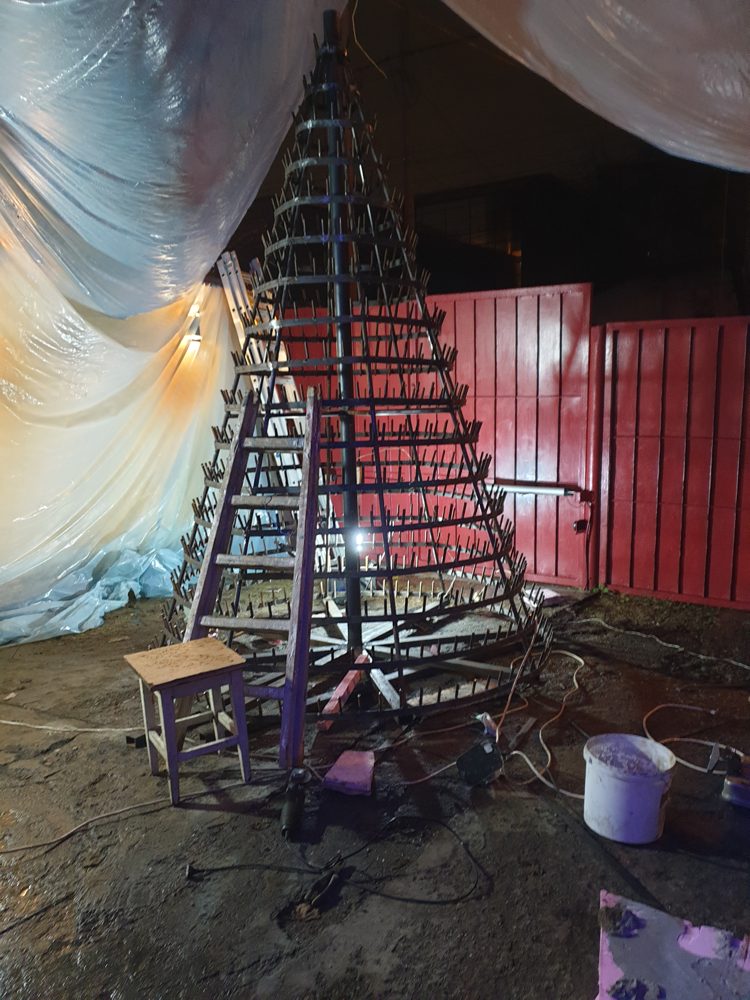
On the 10 ft steel tree, each spike is a 3-1/4 in (about 83 mm) length of 3/8 in rebar, sized for the neck of a standard 750 ml bottle. Test a few odd bottles before you collect a crate of them.
Why neck-down matters. A bottle hung upside down can't fill with rain. That means no standing water for mosquitoes, no green slime inside the glass, and no water to freeze and crack the bottle in winter.
Choosing colours
The traditional bottle tree is cobalt blue, the colour said to attract spirits. It is still the one most people picture, and it glows a deep, rich blue in sunlight.
If you are mixing colours, it helps to know how each behaves:
| Glass | In daylight | Lit at night |
|---|---|---|
| Cobalt blue | Deep, saturated, the classic look | Strong glow, the most dramatic |
| Green | Common and easy to collect in quantity | Warm green, softer than blue |
| Amber and brown | Darker, can look dull in shade | Rich gold, very warm under white LEDs |
| Red and pink | Rare and eye-catching | Glow well, a good accent |
| Clear and frosted | Almost disappears in daylight | Sparkles; picks up the colour of the lights |
A few ways to arrange them:
- One colour per ring. Bands of colour from bottom to top read clearly from a distance.
- A gradient. Dark colours at the base, lighter towards the top, so the tree seems to brighten as it rises.
- All blue with accents. The traditional look, with a few red or clear bottles to break it up.
- Fully mixed. The most cheerful, and the easiest when the collection grows a bottle at a time.
How many you really need
You don't have to fill every spike. On the 10 ft tree with 614 spikes:
| Fill | Bottles |
|---|---|
| Every spike | 614 |
| Every second spike | 307 |
| Every third spike | 205 |
Start on the bottom rings. They are at eye level, where bottles show best, and the open spikes higher up read as branches rather than gaps. Add more as the collection grows.
Where to get them
- Your own recycling, and friends'. Ask for specific colours; most people are happy to save blue bottles once they know.
- Restaurants, bars and wine shops. They throw out bottles every night. Ask politely, offer to collect on a fixed day, and bring your own crates.
- Weddings, parties and wine tastings. A single event can give you dozens of matching bottles.
- Craft and online shops. Coloured empty bottles are sold for crafts. Useful for filling in a rare colour, expensive for a whole tree.
Getting the labels off
Most labels come off with heat, water and a little patience.
- Soak the bottles in a tub of hot water with a good squirt of dish soap and a few spoons of baking soda, for 30 minutes to an hour.
- Peel and scrape the labels while the glue is still soft. A plastic scraper or an old card won't scratch the glass.
- Remove leftover glue with a little cooking oil rubbed in with a cloth, then wash it off with soap.
- Rinse inside and out, then stand the bottles neck-down in a crate to drain and dry.
Leave a few labels on. A row of bottles from a favourite wine, or from a wedding, gives the tree a story. Paper labels fade outdoors within a season or two, so expect them to weather.
Lighting it at night
A bottle tree in daylight depends on the sun. To make it glow after dark, the light has to come from inside the cone, so it shines through the glass towards you.
- Run string lights along the rings, behind the bottles. On a steel tree the rings carry the cable, and the bottles hang in front of it.
- Use warm white LEDs if you have mixed colours. They make blue, green and amber all glow without changing them. Coloured lights are fun but fight with coloured glass.
- Choose lights rated for outdoor use. Look for an IP44 rating at minimum, IP65 if they will sit in rain and snow all season.
- Prefer low-voltage sets that run from a transformer. The cable on the tree carries a safe voltage, and only the plug-in transformer needs to be under cover.
- Put it on a timer. Dusk to midnight is enough to be seen, and the lights last longer.
Where to place the tree
- Low sun from behind. In winter the sun sits low; a spot where it passes through the glass makes the tree light up in the afternoon.
- A darker background. Hedges, a wall or shade behind the tree make the colours stand out.
- Away from paths and play areas. Glass breaks if something knocks into it. Keep a clear space around the base.
Looking after it
- Once a year, hose it down. Dust and pollen dull the glass.
- Check for cracks in spring. Replace any chipped or cracked bottle before it breaks.
- Winter is fine. Empty bottles hung neck-down cope with frost. In very high winds, a large tree should be anchored at the base.
Want to build the tree itself?
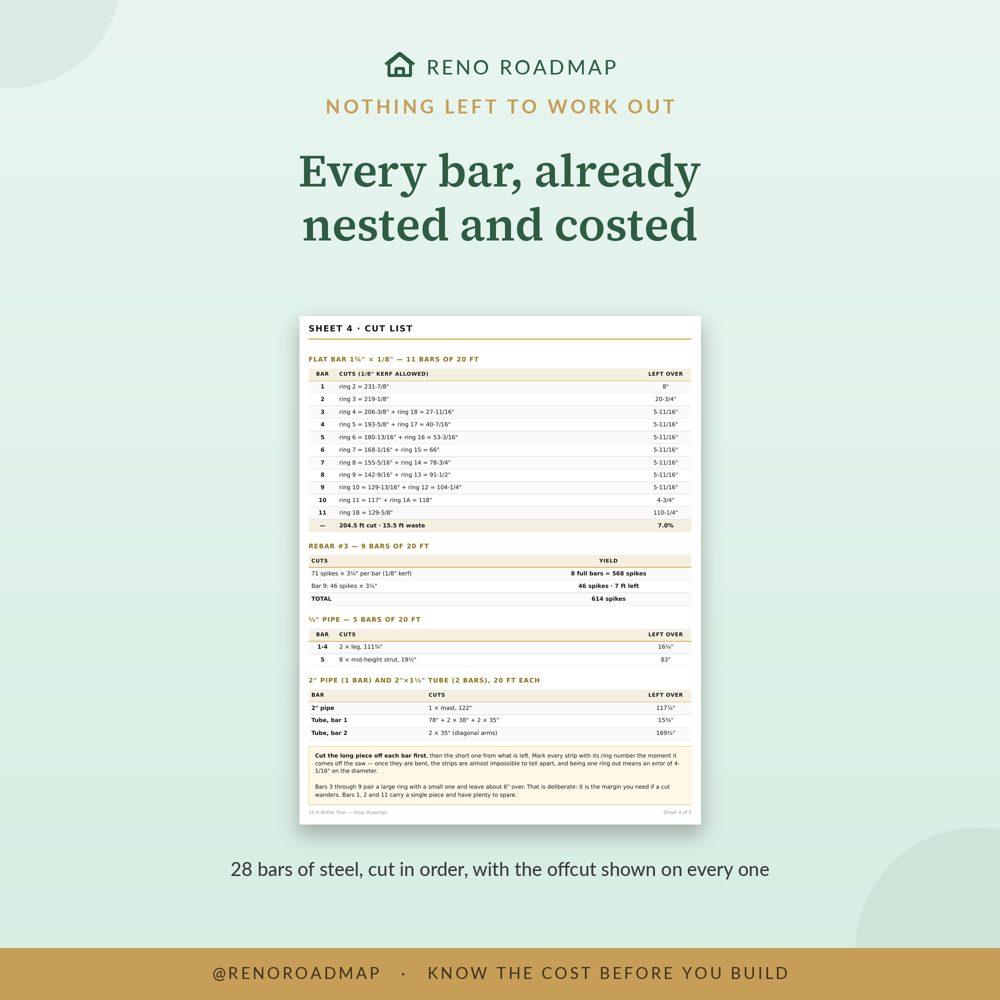
The plan set covers the base, mast, 18 rings and all 614 spikes, with drawings in feet and inches and in millimetres and an Excel calculator that resizes everything to any height.
Get the Bottle Tree plans · €32Building the frame first? Tools and materials to build a welded bottle tree lists the steel to order and where the hours go.
Lights and wiring are outside the scope of the plans. Use outdoor-rated equipment and install it to your local electrical standards.