A bottle tree is exactly what it sounds like: a tree, or something shaped like one, with glass bottles slipped over the ends of its branches. In the American South it has been part of the yard for generations. Today it turns up in gardens everywhere, often with no one quite sure what it means.
It means a few things, and the oldest of them has nothing to do with decoration.
A trap for spirits
The most widely told account traces the bottle tree to Central Africa, and in particular to the Kongo region. The belief was that glass could catch a wandering spirit. A bottle hung near the house would draw in anything that came by at night, and keep it from reaching the door.
What happened next depends on who tells it. In one version, the morning sun heated the glass and destroyed whatever was trapped inside. In another, the bottles were taken down from time to time, corked, and set adrift on a river.
The custom crossed the Atlantic with enslaved people from Central Africa and took root in the plantation South. That is why folklorists and garden historians usually describe the bottle tree as a symbol of the Southern slave tradition, and why it is often called by another name: the spirit tree.
Not everyone agrees on the starting point. Mississippi garden writer Felder Rushing, who did more than anyone to bring bottle trees back into gardens, argues that the idea is older and began further north. Glass was being made in North Africa and the Near East thousands of years ago, and the belief that spirits could live in a bottle is very old too. The African American bottle tree is the line that survived; the roots may go deeper.
Why blue
The classic bottle tree is blue. Spirits were said to be especially drawn to the colour, so a blue bottle made the best trap.
In practice, "blue" meant whatever cobalt glass was in the house. For much of the twentieth century that was the milk of magnesia bottle, and it became the standard. When there wasn't enough blue to go round, brown snuff and beer bottles filled the gaps.
The same colour shows up elsewhere in Southern folk protection. Porch ceilings and doors painted a soft blue, often called "haint blue", were meant to keep restless spirits, or haints, from crossing into the house.
The crape myrtle
The traditional bottle tree wasn't built. It was a crape myrtle, the flowering tree planted in front of half the houses in the South, that had died or been cut back. Its stiff, upward-reaching branches were trimmed to stubs, and a bottle went over the end of each one.
That shape is the reason a steel bottle tree looks the way it does. A central mast with branches angled up and out, each ending in a single spike, is a crape myrtle drawn in metal.
From folk charm to garden art
Two people did a lot to keep the bottle tree in the public eye.
The writer Eudora Welty worked for the Works Progress Administration in Mississippi in the 1930s and photographed bottle trees as she travelled the state. She later put one at the heart of her short story Livvie (1942), where a line of bare crape myrtles stands outside a farmhouse, every branch ending in a coloured bottle, put there to keep the spirits out.
Decades later, Felder Rushing wrote and lectured about bottle trees, traced their history, and encouraged gardeners to make their own. As garden design loosened up and colour came back into fashion, the bottle tree moved from the back yard of old farmhouses to the front of suburban gardens and the pages of magazines.
Today most people put one up for the way it looks: glass catching the low sun in winter, when the rest of the garden is grey, and glowing at night when it is lit. The spirits are optional. Plenty of owners like knowing they are there anyway.
Bottle trees now
Modern bottle trees come in three broad kinds:
- Living or dead trees. The original version, still seen across the South: a real tree, usually a crape myrtle or cedar, trimmed and hung with bottles.
- Small metal stakes. Garden-centre trees, a few feet tall with a dozen or so arms, made to stand in a flower bed.
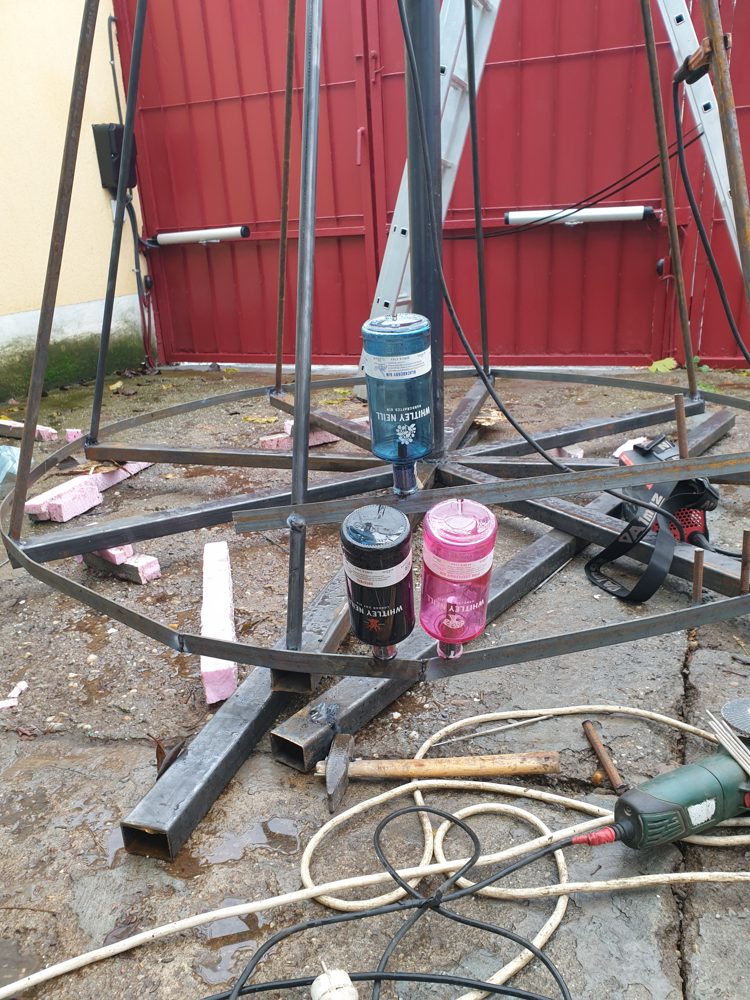
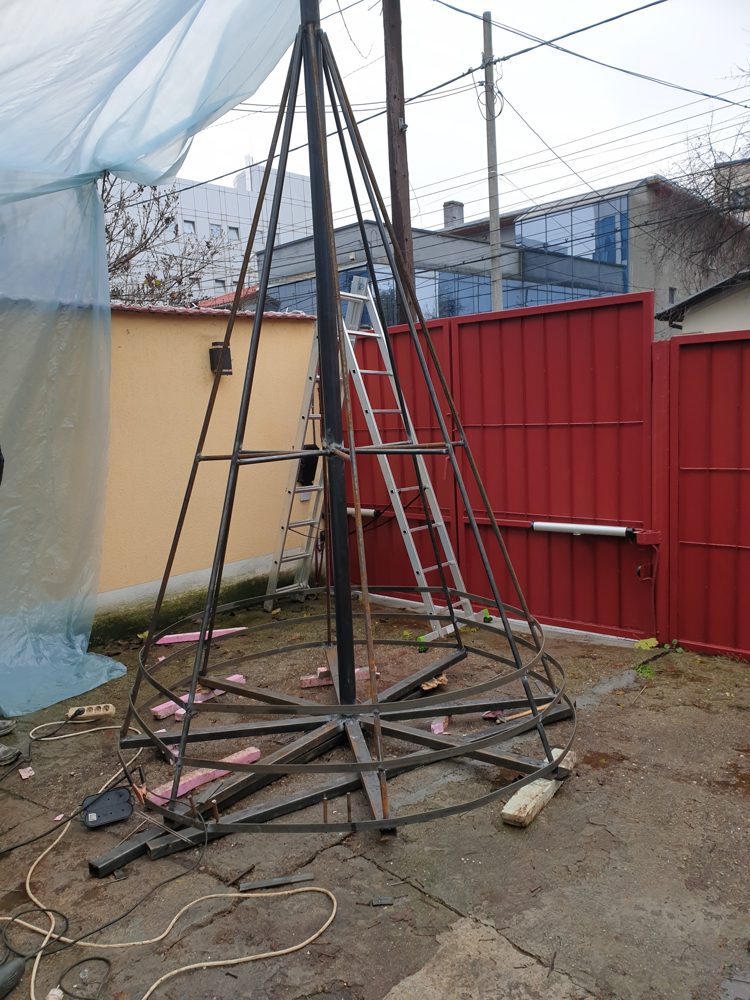
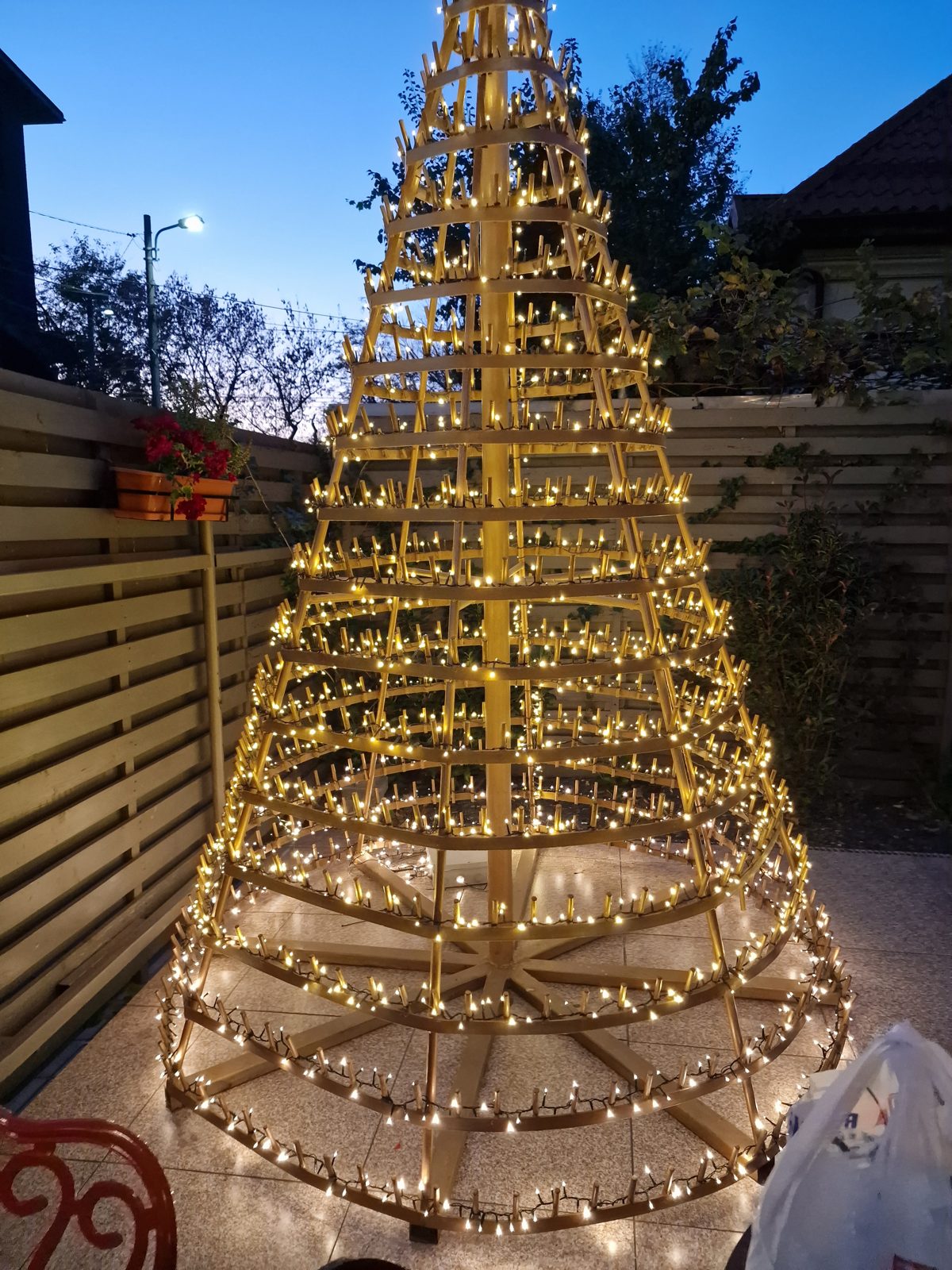
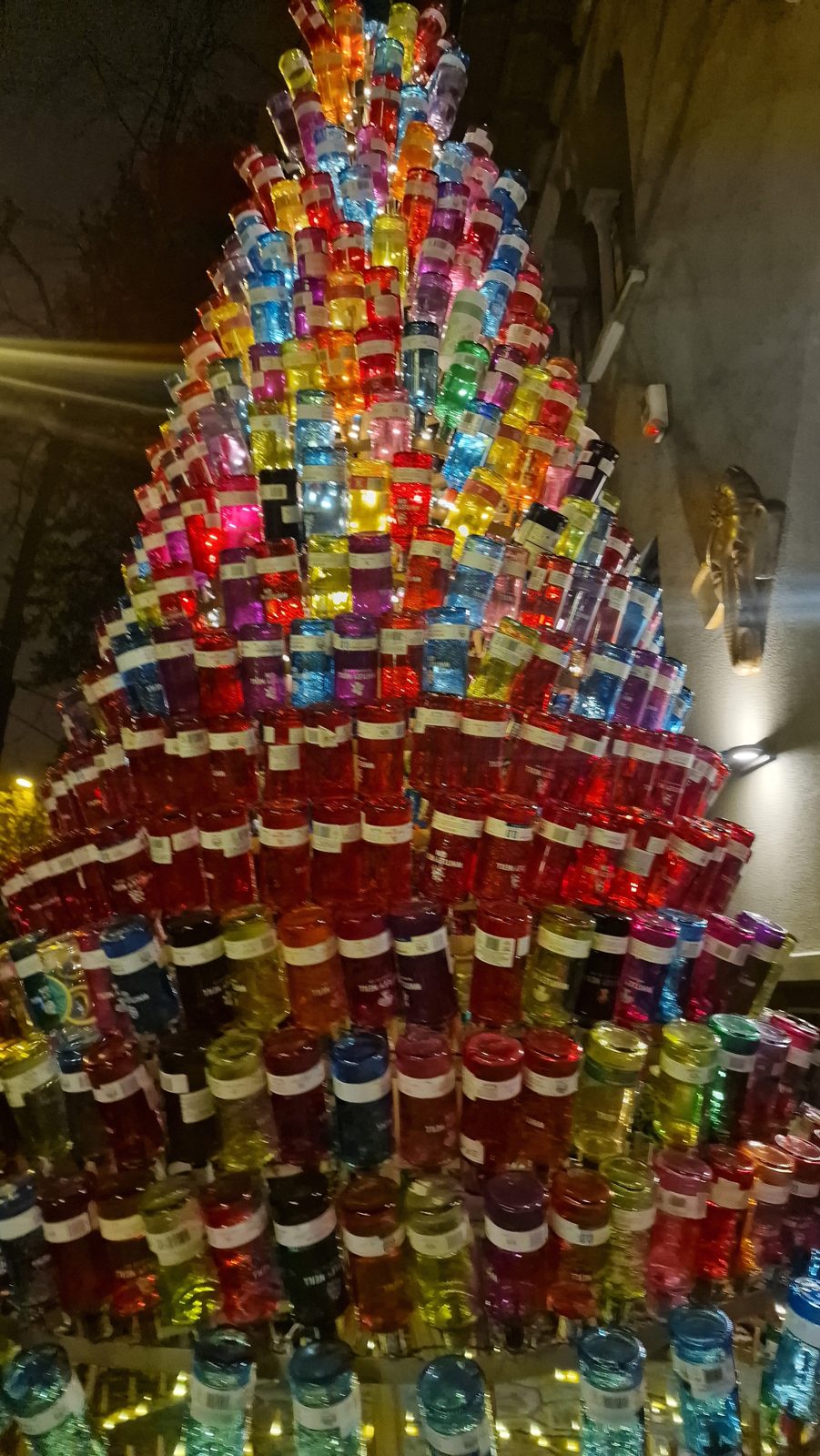
- Large steel trees. Full-size, welded frames that take hundreds of bottles and can stand as a centrepiece or a seasonal Christmas tree. Lit from inside, they turn the coloured glass into a lantern.
The last kind is where the tradition meets the workshop. Built from a mast, rings and short spikes, a steel bottle tree carries the old crape myrtle shape at a scale no garden tree could manage, and it lasts for decades.

Build a full-size steel bottle tree
The plan set takes you from a pile of steel to a 10 ft tree with 614 spikes, with drawings in feet and inches and in millimetres, a cut list for every bar and an Excel calculator that resizes the tree to any height.
Get the Bottle Tree plans · €32Where to put one
The tradition has a practical side, too. A bottle tree shows best where low sun can pass through the glass from behind, ideally against a darker, shaded background, so the colours light up. It is meant to be seen, so give it a spot where it stands on its own rather than lost among other plants.
For choosing bottles, cleaning them and lighting the tree at night, see How to choose bottles for a bottle tree. For the build itself, Tools and materials to build a welded bottle tree lists the steel and the hours.
Sources: University of Arkansas Division of Agriculture, Plant of the Week: Bottle Tree; Felder Rushing, Bottle Trees… and the Whimsical Art of Garden Glass; Eudora Welty, Livvie (1942); regional history pieces from Appalachian History, Pinestraw and the Corning Museum of Glass library. Accounts of the tradition's origins differ, and dates given for it range widely.