Plywood is thin layers of wood, called veneers or plies, glued on top of each other with the grain of each layer turned 90 degrees to the one below. That cross-grain build is the whole point. Solid wood swells and shrinks across its width as the seasons change; plywood barely moves, which is why a wide plywood shelf stays flat where a glued-up board might cup.
The three you'll find in the store
Birch plywood (often sold as multiplex) is made from many thin birch plies. An 18 mm sheet usually has 13 of them. It is heavy, hard, with almost no voids inside, and the edges look good enough to leave on show. It is the best choice for furniture that gets used hard: beds, children's furniture, shelves that carry books.
Poplar plywood is lighter, softer and cheaper. It has fewer, thicker plies, and the core can have small gaps you only see on a cut edge. It cuts and sands easily, which makes it pleasant for shapes cut by hand, but it dents more easily and screws hold less well in its edges.
Pine or softwood plywood is built for construction. The faces have knots and patches, and it is meant to be covered. Fine for a workshop shelf, not ideal for a piece you want to finish clear.
OSB and MDF are not plywood. OSB is pressed wood strands, rough and meant for building. MDF is pressed wood fibre: perfectly flat and smooth to paint, but heavy, it swells badly if it gets wet, and it holds screws poorly in its edges.
Face grades
Each face of a sheet has its own grade, so a sheet can be good on one side and rough on the other. European birch plywood uses letters:
| Grade | What it means |
|---|---|
| B | Almost clean. Small colour variation, very few tiny knots |
| BB | Small patches where knots were cut out and plugged |
| CP | Sound knots and small repairs, meant to be painted |
| C | Open knots and splits, for hidden or structural use |
A B/BB sheet is a common furniture compromise: one clean face to show, one patched face for the inside. In the US the letters run from A to D, with the same idea.
18 mm is rarely 18 mm
The thickness on the label is nominal. Plywood sold as 18 mm is often somewhere between 17.5 and 18.5 mm, and the imperial 3/4" sheet is usually 23/32" (about 18.3 mm). Tolerances vary between brands and even between sheets of the same batch.
It doesn't matter for a box screwed together. It matters a lot for anything that slots together. A slot cut for 18 mm in a sheet that is really 18.4 mm won't go on; a slot cut for 19 mm in a sheet that is really 17.6 mm wobbles. Measure the sheet you actually bought with a caliper, in a few places, and cut a test slot in an offcut before cutting the real ones.
Formaldehyde and where the sheet will live
Plywood glue can give off formaldehyde, especially when the sheet is new. In Europe, look for E1 or a lower emission class on the label. For a child's room, ask specifically for low-emission sheets and let finished pieces air out for a few days before they go in.
Ordinary interior plywood is not made for wet places. For a bathroom, a balcony or anything outdoors, look for exterior or marine plywood, with a waterproof glue, and still protect the edges, because water gets in through the end grain first.
Buying and storing
- Have the store cut it. Many DIY stores cut sheets to size. Even rough cuts into smaller pieces make a full sheet easier to carry and to cut accurately at home.
- Check it's flat before you pay. Lay it on the floor or sight along the edge. A sheet that is already bowed won't straighten later.
- Store it flat or standing on edge against a wall, fully supported, away from damp floors and radiators. Let it sit in the room where you'll work for a day or two before cutting.
Cutting without splintering the good face
Saw teeth splinter the face where they come out of the wood. A jigsaw and a hand-held circular saw cut on the upstroke, so the top face splinters: put the good face down. A table saw cuts on the downstroke, so the good face goes up.
Two more things help on any saw. Run masking tape along the cut line, and score the line first with a sharp knife against a straightedge. The fibres on the face are already cut when the blade arrives, so they can't tear.
Finish every cut edge with a light sanding at 120 grit and a slight round over. Plywood edges can splinter in your hand, and that matters most on furniture for children and pets.
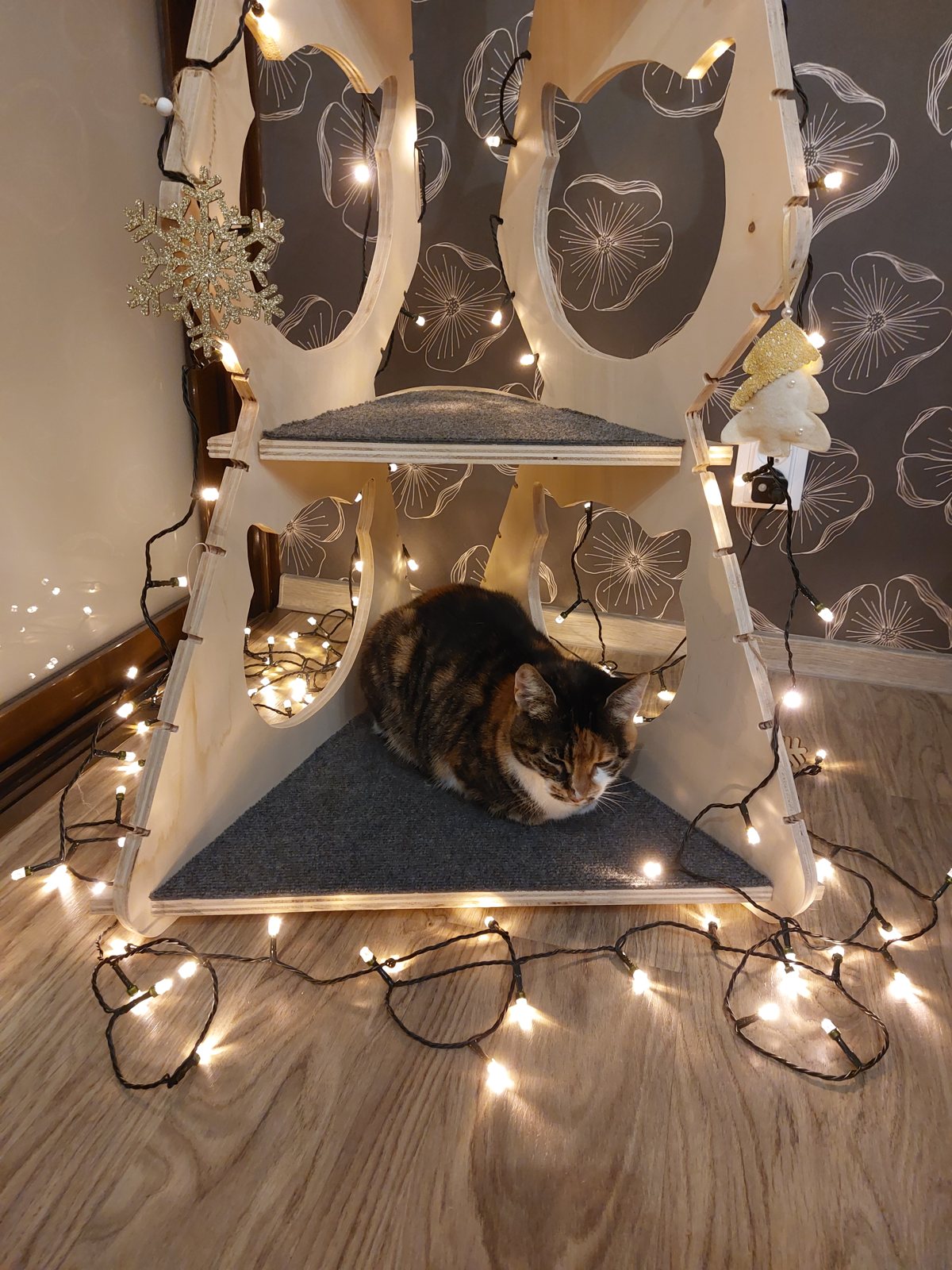
Three sheets of plywood, no screws
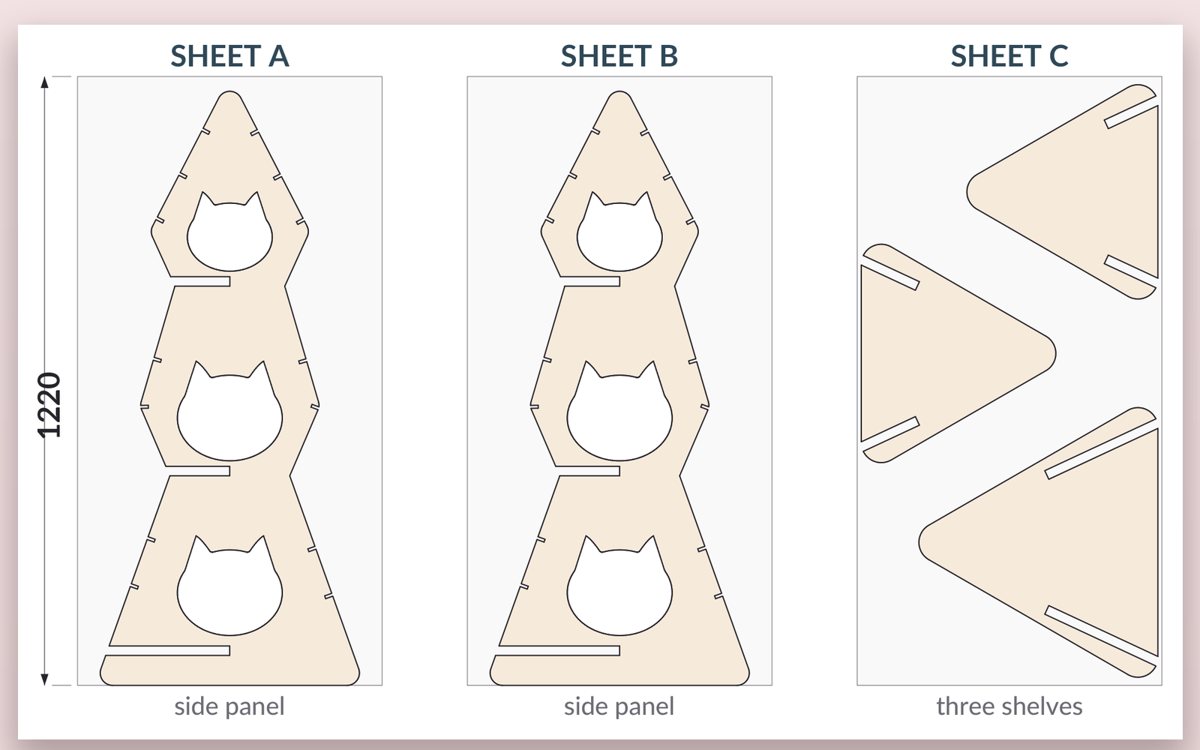
The cat tree plans are built entirely from 18 mm plywood: two side panels, three shelves, all joined with slots. The plans include a test-slot step for exactly the thickness problem above.
Get the cat tree plans · €9