Most winter damage starts in autumn. A blocked gutter overflows and soaks a wall, a garden tap left full splits when it freezes, a boiler that hasn't been serviced gives up on the first cold night. None of these are big jobs if you catch them early.
The list below is split by where the work happens, and ordered roughly by when to do it. Outdoor jobs come first, because they need dry weather and mild temperatures that won't last.
Early autumn: while it's still mild
These jobs need dry days and temperatures above about 10 °C (50 °F). Do them first.
- Touch up outdoor paint and wood finishes. Most exterior paints, stains and oils won't cure properly in the cold. Spot-prime bare wood and any rust on metal railings, gates and fences now. For which finish goes where, see How to protect outdoor wood.
- Seal gaps around the outside of the house. Check the caulk around window and door frames, and where pipes and cables enter the wall. Cracked or missing sealant lets in water and draughts.
- Look at the roof from the ground. Binoculars are enough. Look for missing or slipped tiles or shingles, lifted flashing around the chimney, and damaged ridge tiles. Call a roofer for anything you can't reach safely.
- Cut back branches that touch the roof, gutters or walls. Winter wind and snow turn them into scrapers.
Rule of thumb for outdoor finishes: check the tin. Most products give a minimum application temperature, and it applies to the surface and the nights that follow, not just the afternoon you paint.
Water: gutters, drains and taps
Water causes more winter damage than cold does. Most of this section is about giving it somewhere to go.
- Clear the gutters after most leaves have fallen. Scoop out the debris, then run a hose along them to check they drain towards the downpipes without overflowing.
- Check the downpipes. Water should come out freely at the bottom. Make sure it is carried away from the house, not pooling against the foundation.
- Check the ground slopes away from the walls. Soil or paving that falls towards the house sends water into the base of the walls.
- Drain outdoor taps and hoses. Turn off the inside valve that feeds each outdoor tap, open the tap to empty it, and leave it open. Drain hoses and store them inside.
- Blow out or drain the irrigation system, if you have one, before the first hard frost.
Heating and energy
- Have the boiler or furnace serviced. Book it early; technicians are busiest when the first cold snap hits.
- Change or clean the heating filters on forced-air systems.
- Bleed the radiators. If a radiator is cold at the top and warm at the bottom, it has air in it. A radiator key and a cloth are all you need.
- Have the chimney swept if you burn wood. Creosote build-up is the main cause of chimney fires.
- Check the attic insulation. It should be even and deep, with no bare patches. Heat lost through the roof is the most expensive heat in the house.
- Reverse ceiling fans to run clockwise on low, which pushes warm air down from the ceiling.
Windows and doors
- Feel for draughts on a windy day, around frames and under doors. A candle or incense stick shows the airflow clearly.
- Replace worn weatherstripping and door sweeps. They are cheap and take minutes to fit.
- Clean and lubricate window hinges and locks, so they close tightly.
- Swap screens for storm windows, where you have them.
Safety
- Test smoke and carbon monoxide detectors and replace the batteries. Autumn is when heating, fireplaces and candles come back into use.
- Check the fire extinguisher is charged and easy to reach.
- Prepare for power cuts: a torch, spare batteries and a list of emergency numbers where everyone can find them.
- Get the winter gear ready before you need it: snow shovel, de-icing salt or grit, and a scraper for the car.
Garden and outdoor gear
- Clean and store garden furniture, or cover it.
- Empty and store pots that can crack in frost, especially terracotta.
- Service the lawn mower before putting it away: clean the deck, and either run the fuel out or add a stabiliser.
- Tidy outdoor lighting and decorations. If you're putting up seasonal lights, check cables for damage and use only outdoor-rated equipment.
The checklist at a glance
| When | Jobs |
|---|---|
| Early autumn | Outdoor paint and finishes, exterior sealant, roof check, branches |
| Mid-autumn | Boiler service, filters, chimney sweep, attic insulation, windows and doors |
| After the leaves fall | Gutters and downpipes, ground drainage |
| Before the first frost | Outdoor taps and hoses, irrigation, pots, garden furniture |
| Any time | Detectors, extinguisher, emergency kit, winter gear |
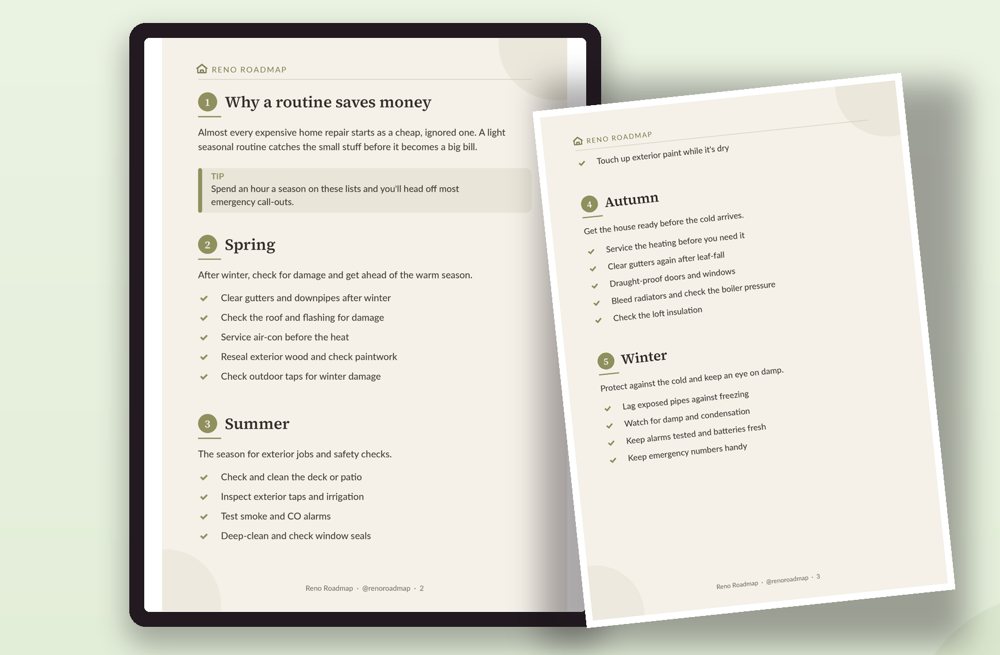
The whole year, season by season
The guide has a checklist like this for spring, summer, autumn and winter, so small jobs never turn into big repairs. Print it, tick it off, and keep it with the house papers.
Year-Round Home Maintenance · €9This is a general checklist. Gas appliances, electrical work and anything on the roof should be handled by a qualified professional, following local regulations.